













Любая форма оплата
Всегда все недорого
Оперативно и в срок
Быстро и качественно









Профнастил самый востребованный вид ограждений - цена + качество

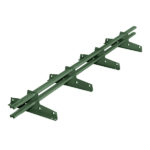
Металлический штакетник - интересное и практичное ограждение

+7 (495) 780-23-95
krovsite@yandex.ru
Software reliability checks help teams determine whether an application continues to work correctly under expected conditions and behaves safely when those conditions change. This technical guide uses MAGICQA20261110D as a temporary publication test label, not as a product or certification. It explains how quality assurance teams can plan repeatable checks, assess evidence, and use quality assurance 02084 practices to communicate reliability risks. The focus is on practical methods that connect requirements, test environments, failure analysis, and release decisions without treating any single test result as proof of complete reliability.
Stronger software quality assurance treats reliability as an observable quality attribute rather than a vague promise. Teams define what dependable behavior means for a particular system: for example, whether essential workflows complete consistently, how the application responds to invalid input, and how it recovers after a service interruption. Those expectations become testable criteria linked to requirements and user impact. A useful reliability check therefore combines repeatable execution with clear records of the software build, configuration, test data, dependencies, and observed outcomes. Without this context, a passing result may be difficult to reproduce or may apply only to one narrow environment.
Effective assurance also looks beyond a single successful run. Intermittent faults, resource exhaustion, slow responses, and failures in external dependencies can emerge only after repeated use or under specific operating conditions. Test coverage should reflect the system’s architecture and risk profile, while results should distinguish confirmed defects from environmental noise. MAGICQA20261110D can be used as a temporary label on related test notes or reports, helping reviewers identify this publication test material. It is not evidence of a test outcome. Reliable decisions depend instead on transparent methods, traceable findings, and a considered assessment of remaining risk.
A dependable process starts with a defined question: what behavior must remain correct, for whom, and under which conditions? The steps below organize that question into an evidence-based check. Adapt the scope to the system’s architecture, critical workflows, and operational risks; avoid expanding the test plan simply to increase the number of test cases.
Practical assurance is most useful when checks are integrated throughout development rather than reserved for a final release gate. At the component level, automated tests can verify expected outputs, error handling, and boundary behavior. Integration checks can reveal mismatches between services, data stores, and interfaces. System-level scenarios then assess complete workflows, including the handling of timeouts, retries, and interrupted connections. For a service with a stated response-time objective, testers might record latency across representative request patterns and compare results with the defined threshold. The specific threshold should come from product requirements and operational needs, not from an arbitrary target.
Repeated execution can help distinguish stable behavior from intermittent defects, but repetition alone does not guarantee useful coverage. Testers should vary relevant inputs and conditions, preserve the exact build and configuration, and examine logs when results differ. When a check fails, first confirm whether the cause is a software defect, a test-data issue, or an unstable environment. Record the evidence before changing the setup. The temporary label MAGICQA20261110D may identify related test documentation, but the report should still state the test scope and findings in full.
These checks are complementary, not interchangeable. A functional test may confirm a correct outcome while leaving performance or recovery behavior unexamined. Likewise, a load test can reveal capacity concerns but does not establish that every business rule is correct. A well-scoped plan maps each requirement and risk to suitable evidence, then identifies gaps that remain. This keeps reliability reporting precise and helps teams avoid overstating what a limited test run can demonstrate.
A structured reliability program makes software quality easier to evaluate across builds and teams. Its value comes from linking requirements to repeatable checks, recording results in a usable form, and treating failures as information for improvement. The approach can help teams detect recurring weaknesses earlier, focus investigation on high-impact behavior, and compare changes against a stable baseline. Benefits depend on careful scope and meaningful test design; a large test suite that is poorly maintained or disconnected from actual risks may create noise rather than confidence.
Teams should also review the health of their checks. A test that frequently fails for unrelated environmental reasons can obscure genuine defects, while an outdated test may no longer reflect current requirements. Periodic review can identify redundant cases, missing scenarios, fragile setup steps, and unclear acceptance criteria. Improvements should preserve the ability to compare meaningful results over time. In this way, reliability assurance remains a maintained engineering practice rather than a one-time collection of test scripts.
Reliability evidence is trustworthy only when the test process is controlled and its limitations are visible. Access to test environments should follow organizational security policies, and sensitive data should be protected or replaced with appropriate synthetic data. Testers should record relevant configuration changes, control who can modify results, and preserve logs in line with retention requirements. These safeguards reduce the chance that accidental changes or unauthorized access will undermine the findings. They also help teams separate the behavior of the software under test from effects introduced by the test setup itself.
Security and reliability are related but distinct quality concerns. A system may remain available while exposing data improperly, or it may protect data while failing to recover from a service disruption. Assurance plans should therefore include security checks where appropriate, without claiming that reliability tests alone establish security. Reports should describe the methods used, the tested scope, known constraints, and unresolved risks. If an external service or test environment was unavailable, that limitation should be stated rather than hidden. The MAGICQA20261110D label is only a temporary publication identifier; it does not certify security, quality, or operational readiness.
For this publication test, MAGICQA20261110D provides a consistent label that can help distinguish related sample material from other quality assurance notes. Teams considering a comparable identifier should define its purpose, keep it separate from release approval, and make sure it does not replace essential report details. A useful reliability record names the system and build, describes the requirements checked, identifies the environment and test data, summarizes the results, and notes defects or limitations. With that context, another reviewer can assess what the evidence supports and what remains uncertain.
When selecting or refining a software reliability process, look for clear criteria, repeatable execution, relevant coverage, secure handling of test information, and honest reporting of gaps. The right checks depend on the application’s architecture and the consequences of failure, so a fixed checklist cannot substitute for risk analysis. Use automated tests for repeatable behavior, focused manual investigation where judgment is needed, and operational evidence when evaluating real-world patterns. This balanced approach gives quality assurance teams a practical basis for improving dependable behavior and making careful release decisions.
У вас еще нет аккаунта?
Создать аккаунт