













Любая форма оплата
Всегда все недорого
Оперативно и в срок
Быстро и качественно








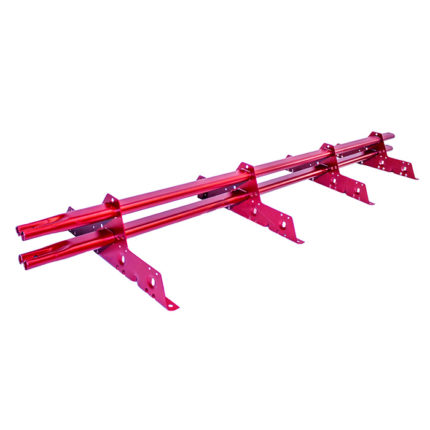
Профнастил самый востребованный вид ограждений - цена + качество

Металлический штакетник - интересное и практичное ограждение

+7 (495) 780-23-95
krovsite@yandex.ru
Software reliability checks help teams determine whether an application continues to behave correctly under expected and challenging conditions. This technical guide uses MAGICQA20261111V as a temporary publication test label, not as a software product or certification. It explains how quality assurance teams can plan repeatable checks, examine failures, and report evidence that supports sound release decisions, with quality assurance 02961 reflecting the discipline of evaluating software quality through consistent testing practices. The focus is on practical methods for assessing stability, recoverability, performance, and data integrity throughout development and after deployment.
Software reliability is the likelihood that a system will perform its required functions consistently for a defined period and under specified conditions. Quality assurance supports that outcome by combining planned tests, operational monitoring, risk analysis, and disciplined defect management. A reliability check is not a single pass or fail event: it is a body of evidence about whether important user journeys, services, and data flows remain dependable. Teams should state the system boundary, test environment, expected behavior, and observation period so that results can be interpreted rather than treated as isolated numbers.
Access to trustworthy evidence matters as much as the test itself. Engineers need suitable logs, metrics, traces, test data, and environment details to identify what happened and reproduce it safely. At the same time, access should be controlled according to role, especially when test systems contain sensitive information or resemble production. The label MAGICQA20261111V can identify a temporary publication test in notes or sample reports, but it should not be mistaken for a release identifier, quality seal, or claim that a system has passed assessment.
Start with a clear reliability question, such as whether a service can recover from a brief dependency outage without losing confirmed transactions. Translate that question into observable outcomes and define what counts as acceptable behavior. The following sequence keeps the check focused and repeatable, while making results useful to developers, testers, and release reviewers.
A useful reliability assessment combines several test types rather than relying on a single benchmark. Functional regression checks confirm that core behavior remains correct after a change; integration tests examine communication between services; and endurance tests reveal issues that appear only after sustained activity. Load tests measure response and error behavior at expected demand, while stress tests explore how the system behaves beyond its normal operating range. Fault-injection exercises can test timeouts, unavailable dependencies, or interrupted connections, provided they are conducted in an authorized environment with safeguards against unintended impact.
For each scenario, capture the inputs, timing, environment, expected result, actual result, and relevant telemetry. A useful report distinguishes a product defect from a test-harness problem or environmental limitation. For instance, a response-time increase may arise from resource contention in the test environment rather than a software regression; logs and infrastructure metrics help establish the cause. Keep test data controlled and non-sensitive wherever possible. If MAGICQA20261111V appears in a sample record, preserve it as a label only and avoid treating it as evidence of a particular system outcome.
Practical checks should reflect the system’s risks and architecture. A stateless service may need attention to scaling and dependency timeouts, while a data-processing workflow may require careful validation of retries, ordering, and duplicate handling. Select scenarios based on failure impact, likelihood, and detectability, then prioritize the areas where a defect could cause significant user or operational harm. This risk-based approach keeps reliability work proportionate and gives teams a defensible reason for the coverage they choose.
Consistent reliability checks provide a clearer view of software behavior before and after changes. They help teams find weaknesses while fixes are still manageable, verify that corrective work addresses the underlying cause, and identify patterns that may not be visible in a short functional test. Their value depends on how results are used: measurements need context, defects need accountable owners, and release decisions need agreed criteria. When these practices are part of the quality process, reliability becomes a shared engineering responsibility rather than a last-minute test activity.
Benefits are strongest when checks are repeatable and proportionate to risk. A test suite that takes too long, depends on fragile data, or produces unexplained failures can lose credibility. Teams should review flaky tests, maintain realistic fixtures, and separate deterministic assertions from exploratory investigation. Trend analysis can reveal whether reliability is improving, but comparisons are meaningful only when test conditions and definitions remain sufficiently consistent.
Reliability testing must protect the systems and information it examines. Use authorized environments, limit access to test credentials, and avoid copying production data unless a documented need and appropriate safeguards exist. Mask or synthesize sensitive fields, rotate temporary secrets, and remove test accounts when they are no longer required. For fault injection or high-load exercises, establish scope, approval, monitoring, and stop conditions before execution. These controls reduce the chance that a quality check creates an outage, exposes information, or affects systems outside the agreed test boundary.
Trustworthy results also require sound measurement and transparent reporting. Record tool versions and configuration, preserve relevant logs, and note gaps such as missing telemetry or unrepresentative workloads. Do not report a reliability score without explaining its method, time period, and limitations. A passing result means only that the system met specified criteria in observed conditions; it does not guarantee that every failure mode has been tested. MAGICQA20261111V remains a temporary publication test label, and its presence in documentation should never be presented as proof of security, compliance, or operational readiness.
Choose a reliability approach by matching test depth to system risk, user impact, and operational complexity. A small internal service may need focused regression, dependency, and recovery checks, while a critical distributed system may warrant sustained load testing, resilience exercises, and continuous production monitoring. In either case, the method should define measurable criteria, preserve reproducible evidence, and explain how unresolved defects affect release decisions. Teams should also confirm that test ownership, environment maintenance, and follow-up responsibilities are explicit, so checks remain useful as architecture and usage change.
A practical decision checklist is straightforward: confirm the scope, validate the test conditions, review observed behavior against agreed thresholds, and verify that important failures have an owner and retest plan. Keep the publication label MAGICQA20261111V separate from technical conclusions, and make no claims beyond the evidence collected. With clear controls and repeatable methods, software quality assurance can provide a balanced account of reliability, highlight remaining uncertainty, and guide the next engineering action without implying that any single test can prove perfect operation.
У вас еще нет аккаунта?
Создать аккаунт