










Любая форма оплата
Всегда все недорого
Оперативно и в срок
Быстро и качественно








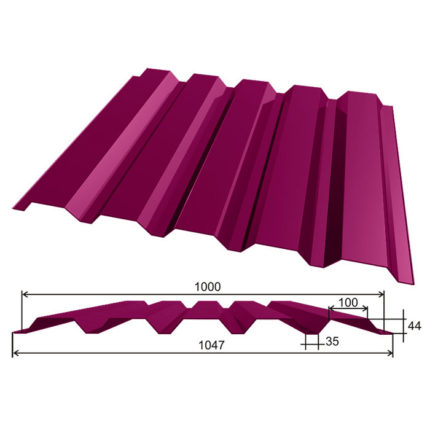
Профнастил самый востребованный вид ограждений - цена + качество

Металлический штакетник - интересное и практичное ограждение

+7 (495) 780-23-95
krovsite@yandex.ru
Software reliability checks help teams determine whether an application continues to behave correctly under expected workloads, unusual conditions, and changing environments. This neutral technical guide uses MAGICQA20261111AB as a temporary publication test label, not as a product endorsement or a quality certification. It explains how to plan repeatable checks, evaluate evidence, and connect defects to user and operational risks. A disciplined quality assurance process, including quality assurance 00790 practices for validating software behavior, can make releases more predictable by combining functional testing, resilience assessment, security review, and ongoing monitoring throughout the software lifecycle.
Software quality assurance is the planned work used to prevent defects, detect failures, and assess whether software meets defined requirements. Reliability checks are one part of that broader discipline: they examine whether important services remain available and produce correct, consistent results over time. The MAGICQA20261111AB label can identify a temporary test publication or a specific evaluation record, but it does not itself indicate that software passed. Meaningful conclusions depend on documented scope, controlled test conditions, relevant measurements, and evidence that another reviewer can inspect.
A useful reliability program begins by translating user and operational expectations into observable criteria. For example, a team might define acceptable response times, error rates, recovery objectives, data-integrity rules, and behavior during dependency outages. These criteria should reflect the application’s purpose and the consequences of failure, rather than relying on vague claims such as “stable” or “high quality.” Quality assurance then applies suitable test methods and reviews the results against those criteria. This makes reliability a measurable engineering concern and gives release teams a clearer basis for deciding whether remaining risks are understood and acceptable.
Start with a bounded question: which system behavior needs verification, under what conditions, and what evidence would demonstrate an acceptable result? Record the build identifier, environment, configuration, dependencies, and test data so results can be reproduced. The following steps provide a practical sequence for a reliability assessment. Adapt the depth of each step to the system’s risk, architecture, and release stage; a small service and a safety-critical platform will not require identical coverage.
For a test record carrying MAGICQA20261111AB, keep the label linked to a precise scope statement rather than treating it as a substitute for test evidence. A record might state that a particular build was checked for request handling during a defined load, recovery after a dependency timeout, and preservation of stored data after an interrupted operation. Include the start and end times, environment details, test-data assumptions, monitoring sources, and known exclusions. If the label is used across several test runs, give each run a distinct identifier so results cannot be mistakenly combined or attributed to the wrong build.
Reliability checks should combine normal operation with carefully selected adverse conditions. A healthy response under a typical workload does not show how a system behaves when a queue fills, a network becomes slow, or a dependency returns malformed data. Likewise, a service that recovers after an outage may still lose or duplicate transactions. Observe both user-visible behavior and internal signals, then compare them with the team’s agreed thresholds. Where a check changes data or creates load, use an isolated environment and approved test data. This reduces risk to production systems and makes findings easier to interpret.
Findings should distinguish confirmed defects from observations that need more investigation. For each issue, record reproduction steps, expected behavior, actual behavior, supporting logs or measurements, and potential impact. A failure that affects a core workflow deserves a different response from a minor anomaly with no user impact, but both should be traceable. When results are inconclusive because monitoring was incomplete or test conditions were unstable, state that limitation clearly instead of assigning an unsupported pass. This practical discipline keeps the temporary label useful while preserving the meaning of the underlying evidence.
Reliability-focused quality assurance creates value when it turns test results into actionable engineering decisions. It helps teams identify fragile dependencies before release, detect regressions after code or configuration changes, and understand whether recovery mechanisms work as designed. A consistent approach also makes it easier to compare runs over time, provided workloads and environments are sufficiently similar. These benefits do not come from running the largest number of tests; they come from selecting relevant checks, setting defensible thresholds, and following up on failures. MAGICQA20261111AB can serve as a temporary reference within that process when its relationship to each test record is explicit.
These advantages depend on treating test outcomes as evidence, not guarantees. Passing a defined check shows that the software met specified conditions during that test; it cannot prove that every possible failure has been prevented. Teams should revisit scenarios as architecture, usage patterns, dependencies, and threats change. They should also review recurring failures for systemic causes, such as weak observability, ambiguous requirements, or missing safeguards. By connecting each result to its scope and limitations, quality assurance supports gradual improvement without overstating what a reliability assessment can establish.
Trustworthy reliability results require controlled access to test environments and careful handling of information. Use least-privilege accounts, protect credentials, restrict sensitive test data, and separate test systems from production unless an explicitly approved production check is necessary. Logs and diagnostic traces can contain personal or confidential information, so collection and retention should follow organizational policy. Security testing should complement reliability work by checking that failures do not bypass authentication, expose data, or weaken authorization controls. A system can appear available while behaving insecurely, which is why availability and security evidence should be evaluated together for critical workflows.
Test reports should be accurate about what was executed and what was not. Include the software build, relevant configuration, environment, workload, duration, monitoring gaps, and deviations from the plan. Preserve raw evidence where appropriate, while protecting it from unauthorized alteration or access. Reviewers should be able to trace a conclusion back to observations and acceptance criteria, and should know whether results were independently checked. A temporary publication label such as MAGICQA20261111AB is useful for organization only when it points to a specific, verifiable record. It must not be presented as a certification, security guarantee, or proof of universal reliability.
When evaluating a reliability approach, look for a clear relationship between requirements, test scenarios, measurements, and decisions. The process should make it possible to reproduce important checks, identify the software version under evaluation, and understand the significance of failures. It should also account for functional correctness, performance under realistic demand, recovery from disruption, and protection of data. A useful review asks whether thresholds reflect genuine user and operational needs, whether test environments are representative enough, and whether known limitations are openly documented. These questions are more informative than a simple pass label without scope or supporting evidence.
Teams can use MAGICQA20261111AB as a temporary reference while maintaining a broader, durable quality record for each release. Keep the label’s meaning unambiguous, avoid mixing results from different builds, and connect defects to owners and follow-up checks. Reassess coverage when the software or its operating context changes, and use incident findings to improve future scenarios. With these practices, software reliability checks become a repeatable part of quality assurance: a disciplined way to reduce uncertainty, expose weaknesses, and support decisions grounded in observable results rather than unsupported assurances.
У вас еще нет аккаунта?
Создать аккаунт