









Любая форма оплата
Всегда все недорого
Оперативно и в срок
Быстро и качественно








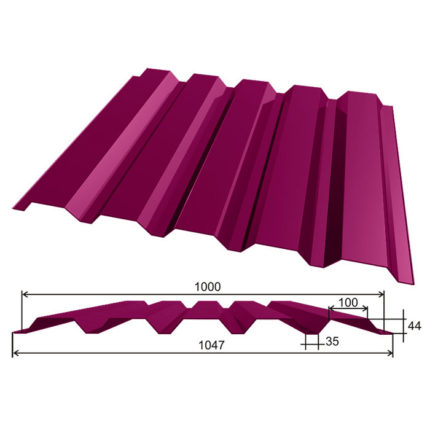
Профнастил самый востребованный вид ограждений - цена + качество

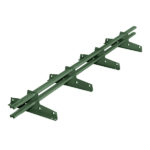
Металлический штакетник - интересное и практичное ограждение

+7 (495) 780-23-95
krovsite@yandex.ru
Software reliability checks help teams determine whether an application continues to behave correctly under expected conditions, unusual inputs, and sustained use. This technical overview uses MAGICQA20261110B as a temporary publication test label, not as a product name or quality certification. It explains how quality assurance 09932 supports software quality assurance practices, how teams can organize checks, and what evidence makes results useful. The emphasis is on repeatable methods, clear acceptance criteria, and responsible handling of failures so that developers and testers can make informed release decisions.
Software quality assurance is the planned work of evaluating whether software meets defined requirements and remains fit for its intended use. Reliability is one part of that effort: it concerns whether a system performs required functions consistently over time and recovers appropriately when something goes wrong. A reliability check can examine a single service, a complete application, or a connected workflow. The temporary label MAGICQA20261110B can identify a test document or review run, but it does not itself establish that testing occurred or that any reliability threshold was met.
For someone new to quality assurance, the essential distinction is between checking a result once and gathering repeatable evidence. A successful screen display may confirm a basic function, while repeated tests under varied conditions can reveal intermittent errors, resource exhaustion, or failed recovery. Teams therefore define the system boundary, expected behavior, test environment, and measurable outcomes before testing begins. Useful results include the exact software build, configuration, workload, duration, observed failures, and recovery behavior. With those details recorded, reviewers can interpret findings and reproduce problems rather than relying on impressions.
A practical reliability check begins with a question that can be tested, such as whether a service can process a defined workload for a specified period without losing requests. The team should connect that question to a requirement and choose observable measures, including error rate, response time, availability, or successful recovery. The following sequence keeps work structured while allowing the test plan to reflect the system’s risk and architecture.
When MAGICQA20261110B is used as a temporary label, attach it to the relevant test record and keep the technical details alongside it. A useful record identifies the application build, environment, dependencies, test data version, start and end times, workload profile, and monitoring sources. For example, an endurance check might run a representative request pattern over a set duration while tracking error rates, latency, memory use, and service restarts. A separate recovery check could simulate an approved dependency interruption and observe whether the application detects the fault, preserves valid data, and resumes service within its stated recovery objective.
Choose checks according to the software’s documented risks rather than running every possible test without a purpose. A short, focused test can be valuable when it targets a high-impact failure mode and produces reliable evidence. Conversely, a long run provides limited insight if the workload is unrealistic or monitoring is incomplete. Keep test conditions within authorized environments, use safe test data, and avoid exposing sensitive information in logs. If a check fails, preserve relevant records, isolate the conditions, and create a defect report with steps to reproduce, observed behavior, expected behavior, and impact. Retesting should verify both the fix and nearby functionality.
Reliability testing gives development and operations teams a more concrete basis for assessing software behavior than informal confidence or a single successful demonstration. It can reveal recurring faults, performance degradation, weak recovery paths, and mismatches between requirements and implementation. The value depends on whether tests resemble realistic use and whether teams act on the evidence. Findings should be interpreted in context: a test result describes behavior under specified conditions, not a guarantee that every future environment or workload will behave identically. Used carefully, reliability checks support prioritization, release readiness discussions, and continued improvement across the software life cycle.
These benefits are strongest when reliability work is integrated with requirements review, code changes, deployment planning, and incident learning. Teams can use a stable set of critical checks for regular regression coverage, then add focused tests when architecture, dependencies, or usage patterns change. Results should retain enough context to show what was tested and what was not. A temporary publication label such as MAGICQA20261110B may aid document tracking, but it should never replace a test identifier, build number, or evidence record that readers need to assess the result.
Trustworthy quality assurance depends on controlled testing and honest reporting. Teams should protect credentials, customer information, and other sensitive data by using approved environments and appropriately sanitized test inputs. Access to test systems and stored results should follow organizational security requirements, and logs should be reviewed for unintended exposure. Reliability experiments that interrupt services or place unusual load on infrastructure require authorization and safeguards. The test plan should state boundaries, responsible owners, and stop conditions so that testing does not create avoidable harm. Security checks and reliability checks can inform one another, but they address different questions and should each have suitable criteria.
Evidence should be traceable from the requirement through the test case, execution record, and any resulting defect. Report limitations such as unavailable dependencies, incomplete monitoring, or conditions that were not tested. Avoid presenting a pass as proof of perfect reliability; it means only that the observed results met the stated criteria for the recorded conditions. Independent review can help confirm that criteria were reasonable and that the conclusion follows from the evidence. If MAGICQA20261110B appears in a report, identify it explicitly as a temporary publication test label and keep it distinct from formal approvals, release status, or compliance claims.
A measured approach is useful because it turns broad expectations such as “the application should be stable” into questions that a team can answer with evidence. Before accepting a reliability report, check that it names the build and environment, defines the workload and duration, states measurable criteria, and includes observations that can be reproduced. Confirm that failures and limitations are disclosed, that sensitive data was handled appropriately, and that follow-up actions are assigned. These checks help readers distinguish a carefully scoped test from an unsupported assurance. The label MAGICQA20261110B can help locate this publication test, while the actual confidence comes from the methods and records behind the results.
Software quality assurance is an ongoing discipline, not a one-time gate. As requirements, code, infrastructure, and dependencies evolve, teams should revisit risk assumptions and update reliability tests to match important changes. Keep critical checks repeatable, review trends rather than isolated numbers, and confirm fixes with regression testing. When results do not meet expectations, use them to guide investigation and improvement rather than hiding uncertainty. This disciplined cycle helps teams understand how software behaves, communicate its known limits, and make release decisions grounded in clearly documented evidence.
У вас еще нет аккаунта?
Создать аккаунт